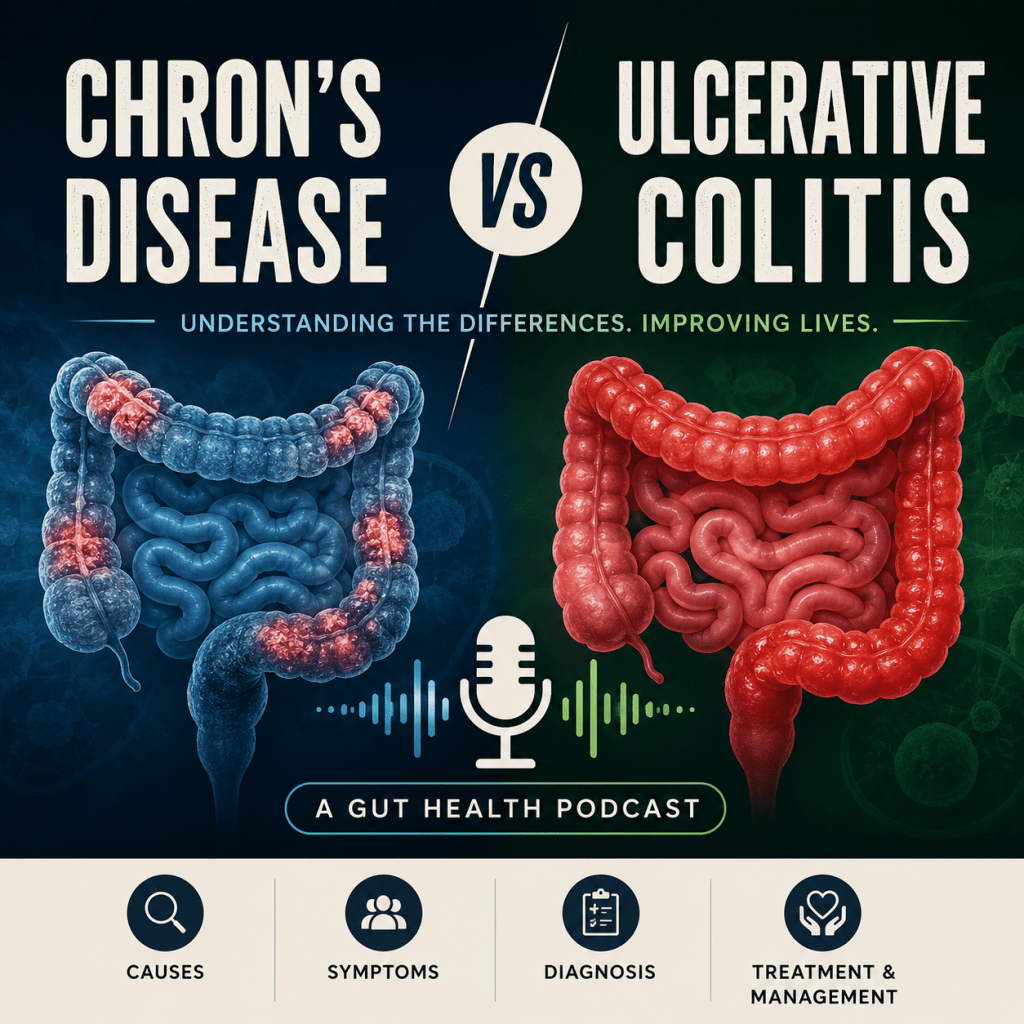
{Click image above to listen to podcast}
Comparative Pathophysiological Analysis and Integrative Management of Inflammatory Bowel Disease (IBD)
Key Points
Distinct Pathologies: Crohn’s Disease (CD) is a transmural, discontinuous condition that can affect any part of the gastrointestinal tract, whereas Ulcerative Colitis (UC) is a continuous, mucosal only inflammation restricted to the colon and rectum. (1,3)
Barrier Disorder Paradigm: Contemporary pathophysiology redefines IBD as a failure of epithelial defense. UC involves the structural failure of the 700 µm mucus layer, while CD is driven by Paneth cell defensin deficiency, allowing bacterial invasion into the intestinal crypts. (4,5)
The Nutritional Triad: Management requires a synergistic triad of Vitamin D3 (regulating claudins 2, 5, 12, and 15 for tight junction integrity), Vitamin K2 (activating osteocalcin and Matrix Gla Protein via GGCX carboxylation), and Calcium (counteracting
corticosteroid-induced bone resorption). (7,10,13)
Socioeconomic Landscape: Canada exhibits one of the world’s highest prevalence rates (1 in 150). With peak incidence occurring between ages 15 and 35, the disease disproportionately impacts workforce productivity and long-term healthcare resource allocation. (2)
Histological Healing Goal: Clinical objectives must shift from simple symptom suppression toward achieving deep mucosal healing through a combination of precision biologics (e.g., Ustekinumab, Upadacitinib) and aggressive nutritional modulation. (18,21)
In Brief (Abstract)
Inflammatory Bowel Disease (IBD), encompassing Crohn’s Disease and Ulcerative Colitis, represents an escalating global health burden, particularly in industrialized nations. (2) Traditionally viewed as a blunt autoimmune condition, IBD is now understood as a complex “barrier disorder” characterized by a failure of the host microbiome interface and a subsequent dysregulated immune response in genetically susceptible individuals. (4) While both conditions involve epithelial failure, they differ fundamentally in their mechanical failure points: UC is marked by the degradation of the protective 700 µm mucus layer, while CD is initiated by Paneth cell dysfunction and antimicrobial peptide (defensin) deficiency. (4,5)
This report synthesizes the strategic importance of transitioning from symptom-focused care to an integrated, microbiome-directed nutritional paradigm. We analyze the epidemiological burden, the socioeconomic implications of early-onset disease, and the structural consequences of chronic inflammation, such as fibrotic strictures in CD and colorectal carcinoma risk in UC. (16,17) Central to this management strategy is the “Nutritional Triad” Vitamin D3, K2, and Calcium which
addresses both mucosal barrier integrity and the high risk of iatrogenic skeletal complications. (7,10,13) Furthermore, we evaluate emerging therapies, including Fecal Microbiota Transplantation (FMT), as part of a shift toward histological healing and the restoration of gut homeostasis. (14)
InDepth Analysis: Identification and Aetiology
The foundation of effective clinical management in gastroenterology rests upon precise terminology and a deep understanding of aetiological drivers. Without distinguishing between the unique anatomical and cellular profiles of Crohn’s Disease and Ulcerative Colitis, clinicians risk applying broadspectrum therapies that may not address the underlying structural damage, specific nutritional depletion, or iatrogenic risks. (1,3)
IBD serves as an umbrella term for idiopathic, chronic inflammatory conditions. Crohn’s Disease is characterized by transmural inflammation that penetrates the full thickness of the bowel wall (from mucosa to serosa), often presenting as “skip lesions” where healthy tissue alternates with inflamed segments. (3) Conversely, Ulcerative Colitis is a nontransmural condition confined to the mucosal layer, following a continuous and predictable pattern of involvement that invariably starts at the rectum. (1)
Comparative Clinical Profiles of CD and UC
Feature Crohn’s Disease (CD) Ulcerative Colitis (UC)
Anatomical Distribution
Discontinuous (“Skip lesions”) (1,3)
Continuous and predictable (3)
Depth of
Involvement
Transmural (Full thickness) (3) Mucosal layer only (1)
Typical
Locations
Structural
Complications
Anywhere in GI tract; often terminal ileum/proximal colon (1)
Fibrotic strictures, fistulae, and abscesses (16)
Restricted to the colon/rectum; always involves the rectum (1,3)
Loss of haustration (“Lead pipe”), pseudopolyps, and malignancy risk (3,17)
The Modern Rise: Genetics and the “Cold Chain Theory”
The rapid increase in IBD incidence during the 20th century highlights a convergence of genetic susceptibility and environmental triggers. Genetic factors are particularly prominent in CD, specifically regarding the NOD2 gene. (2) This gene encodes an intracellular pattern recognition receptor critical for bacterial sensing; variants in NOD2 impair the host’s ability to compartmentalize luminal bacteria, leading to a collapse of mucosal homeostasis. (2)
Environmentally, the “Cold Chain Theory” posits that the widespread adoption of domestic refrigeration altered food microflora. (6) This enabled psychrotrophic bacteria which thrive at low temperatures (–20°C to +10°C) to displace conventional mesophilic flora. In those with genetic predispositions like NOD2 variants, chronic exposure to this altered microbial ecology may trigger the initial inflammatory cascade in the gut. (6)
Socioeconomic Implications
The socioeconomic landscape of IBD is stark, especially in Canada, where prevalence is projected to exceed 470,000 by 2035.2 Because peak incidence occurs between ages 15 and 35, the disease disproportionately affects individuals during their most productive formative years. (2) This creates a significant burden on workforce productivity due to absenteeism and disability, while necessitating long-term healthcare resource allocation for chronic pharmacological and surgical management. Effective care must prioritize long-term histological remission to mitigate these systemic costs.
Pathophysiology: Cellular Injury and Adaptive Changes
A strategic shift in IBD care involves viewing these conditions through the lens of a “barrier disorder.” Rather than a primary autoimmune attack, the disease initiates when the physical and chemical barriers between the host and the lumen fail. (4)
Mechanisms of Cellular Injury
Ulcerative Colitis (UC): The primary insult is the structural failure of the 700 µm mucus layer. This layer normally serves as a robust defense against luminal bacteria. When it fails, bacteria achieve direct contact with the colonic epithelium, leading to cryptitis and the formation of crypt abscesses, hallmark histological features. (4,5)
Crohn’s Disease (CD): The failure is localized to the Paneth cells at the base of the intestinal crypts. (5) These cells are responsible for secreting defensins (antimicrobial peptides). In CD, defensin deficiency allows commensal bacteria to penetrate into protected zones, driving deep, transmural ulceration that crosses all layers of the bowel wall. (5)
Adaptive Changes and Longterm Complications
Chronic inflammation leads to permanent structural adaptations that compromise bowel function. In CD, the transmural nature of the injury stimulates fibroblast proliferation and collagen deposition, resulting in fibrotic strictures that can obstruct the lumen. (16) Furthermore, deep ulcers can lead to fistulae abnormal epithelium-lined tracts between the bowel and other organs (e.g., bladder, skin, or vagina) and localized abscesses. (16)
In UC, repeated cycles of mucosal inflammation cause a loss of haustration, giving the colon a smooth, “lead pipe” appearance on imaging. (17) A critical adaptive risk in UC is the significantly elevated chance of colorectal carcinoma after 8–10 years of extensive disease, requiring rigorous endoscopic surveillance. (3)
Surgical Implications and “So What?”
These structural adaptations dictate clinical outcomes. For UC, a total proctocolectomy is considered curative because the disease is restricted to the colon. (17) However, surgery in CD is fundamentally noncurative; despite the removal of diseased segments, inflammation invariably recurs at the site of the anastomosis (the surgical connection), highlighting the need for ongoing medical and nutritional intervention. (17) These structural injuries trigger not only localized pain but systemic immune and neurological cascades.
Systemic Responses: Immunity and the BrainGut Axis
Managing IBD requires a holistic approach that acknowledges the systemic immune burden and the profound psychological sequelae of chronic gastrointestinal distress.
Cytokine Profiles and Biological Modulation
The immune response differs by condition: CD typically involves a Th1dominant profile (characterized by IFNγ and TNFα), while UC is more associated with Th2 and Th17 responses. (21) The IL23/Th17 axis is now recognized as a critical pathway for both. Modern biological agents target these specific pathways: TNFα inhibitors (e.g., Infliximab, Adalimumab) and newer agents such as antiIL12/23 (Ustekinumab) and selective JAK inhibitors (Tofacitinib, Upadacitinib) have revolutionized the management of the systemic cytokine cascade. (21)
The Brain-Gut Axis
The systemic inflammatory burden leads to high rates of anxiety (57%) and depression (33%) among patients.22 This relationship is bidirectional: psychological stress can trigger disease flares by altering intestinal permeability via the brain gut axis, mediated by stress-induced alterations in the microbial environment. (22)
The Smoking Paradox
Smoking has a paradoxical role in IBD. In CD, it is highly detrimental, precipitating exacerbations and increasing the need for surgery. (23) Paradoxically, epidemiological data shows a modest protective association in UC, likely due to nicotine’s effect on colonic mucus production, though it is never utilized as a clinical treatment due to overall systemic toxicity. (23) While biological agents manage the immediate “cytokine storm,” they do nothing to address the underlying nutritional depletion or iatrogenic bone loss that follows chronic disease.
Integrative Treatment: Dietary Intervention and the Nutritional Triad
Nutrition must transition from a “supportive” role to a foundational therapy that modulates the mucosal environment. Dietary interventions directly address the underlying barrier integrity and the catabolic state of active IBD. (18)
Flare Management and Omega-3 Biochemistry
During acute flares, the priority is reducing mechanical and chemical mucosal irritation. Exclusive Enteral Nutrition (EEN) using predigested, elemental formulas, is a premier strategy for inducing remission, showing rates comparable to corticosteroids in CD without the systemic side effects. (18)
In addition, Omega-3 fatty acids (EPA/DHA) act through competitive inhibition. They displace arachidonic acid in cell membranes, favoring the production of Series 3 prostaglandins and Series 5 leukotrienes over the highly proinflammatory Series 2 and Series 4 eicosanoids.20 This biochemical shift reduces mucosal vascular permeability and blunts neutrophil recruitment.20
The Nutritional Triad: D3, K2, and Calcium
The synergy between these three nutrients is essential for preventing iatrogenic (treatmentinduced) osteoporosis, a risk for up to 37% of IBD patients due to fat-soluble vitamin malabsorption and chronic corticosteroid use. (12,13)
1. Vitamin D3: Beyond bone health, D3 acts via the Vitamin D Receptor (VDR) to regulate tight junction proteins specifically claudins 2, 5, 12, and 15. (7,9) This essentially “mends the fence” of the epithelial barrier. D3 also activates the VDRNLRP6 signaling pathway, which enhances mucosal integrity and reduces inflammatory markers like C-reactive protein (CRP). (24,25)
2. Vitamin K2 (MK7): Critically deficient in IBD due to dysbiosis and antibiotic use, K2 is a cofactor for the enzyme gammaglutamylcarboxylase (GGCX). (10,11) It carboxylates (activates) osteocalcin, which facilitates osteoblast-mediated mineralization by pulling calcium into the bone, and Matrix Gla Protein (MGP), which prevents ectopic calcification in soft tissues. (11)
Furthermore, K2 exerts antiinflammatory effects by inhibiting NFκB. (10)
3. Calcium: Essential for skeletal integrity, calcium absorption is impaired by mucosal inflammation and further suppressed by corticosteroids, which increase renal calcium excretion and suppress osteoblast activity. (12,13)
Supplement Implementation Guide (Clinical Protocol)
Micronutrient Recommended Dosage
Vitamin D3 4,000 IU daily (Adjusted to serum
levels)
Clinical Rationale & Evidence
Enhances claudin expression; modulates mucosal immune tolerance; shown to reduce CRP and activity scores in UC.7,25
Vitamin K2 (MK7)
100–200 µg daily Acts as GGCX cofactor; carboxylates osteocalcin to support bone mineralization;
inhibits NFκB inflammatory signaling.10,11
Calcium
Citrate
Omega3
(EPA/DHA)
1,000–1,500 mg daily (divided doses)
2–3 g daily
(Highquality fish oil)
Preferred form for superior absorption; counteracts corticosteroidinduced bone resorption and malabsorption.13,19
Shifts eicosanoid profile toward Series3/5; reduces circulating TNFα and mucosal vascular permeability.20
Probiotics E. coli Nissle 1917 (Mutaflor)
Demonstrated efficacy comparable to mesalazine for maintaining UC remission in randomized controlled trials.29
The synergy between D3, K2, and Calcium is nonnegotiable for preventing iatrogenic osteoporosis and supporting the “barrier disorder” repair.
Emerging Interventions: Fecal Microbiota Transplantation (FMT)
The clinical evolution of IBD care is moving rapidly toward microbiome-directed therapies. FMT involve transferring processed stool from a healthy donor to a recipient to correct the underlying dysbiosis fundamental to disease pathogenesis. (14)
In UC, randomized controlled trials have demonstrated remission rates of 24–32%, significantly higher than placebo.14 The 2024 American Gastroenterological Association (AGA) guidelines have begun incorporating FMTbased therapies into clinical recommendations, though for IBD, these remain largely within clinical trial contexts. (15) The next generation of this therapy will involve “precision microbiome therapies,” such as engineered bacterial consortia or bacteriophage-based interventions, which offer a more controlled and targeted approach than conventional FMT. (30)
Conclusion
IBD management must evolve from simple symptom suppression to a comprehensive paradigm of histological and mucosal healing. By combining advanced pharmacological agents such as TNF inhibitors and JAK inhibitors with surgical precision and aggressive nutritional strategies, clinicians can address the root “barrier disorder.” The synergistic use of the Vitamin D3, K2, and Calcium triad is essential to address both the immunological dysregulation and the irreversible iatrogenic skeletal complications that define the natural history of these conditions. Only a multidisciplinary approach can preserve long-term quality of life and prevent structural transformation.
References
1. Feuerstein JD, Cheifetz AS. Crohn’s disease: epidemiology, diagnosis, and management. Mayo Clin Proc. 2017;92(7):10881103.
2. Kaplan GG, Windsor JW. The four epidemiological stages in the global evolution of inflammatory bowel disease. Nat Rev Gastroenterol Hepatol. 2021;18(1):5666. 3. Kobayashi T, Siegmund B, Le Berre C, et al. Ulcerative colitis. Nat Rev Dis Primers. 2020;6(1):74.
4. Martini E, Krug SM, Siegmund B, Neurath MF, Becker C. Mend your fences: the epithelial barrier and its relationship with mucosal immunity in inflammatory bowel disease. Cell Mol Gastroenterol Hepatol. 2017;4(1):3346.
5. Wehkamp J, Stange EF. Paneth’s disease. J Crohn’s Colitis. 2010;4(5):523531. 6. Hugot JP, Alberti C, Berrebi D, Bingen E, Cézard JP. Crohn’s disease: the cold chain hypothesis. Lancet. 2003;362(9400):20122015.
7. Battistini C, Ballan R, Herkenhoff ME, Saad SMI, Sun J. Vitamin D modulates intestinal microbiota in inflammatory bowel diseases. Int J Mol Sci. 2020;22(1):362.
8. Gubatan J, Mitsuhashi S, Longhi MS, et al. Serum vitamin D levels are associated with relapse in patients with quiescent Crohn’s disease. Inflamm Bowel Dis. 2019;25(9):15091516. 9. Kong J, Zhang Z, Musch MW, et al. Novel role of the vitamin D receptor in maintaining the integrity of the intestinal mucosal barrier. Am J Physiol Gastrointest Liver Physiol. 2008;294(1):G208G216.
10. Mikulska AA, Kalinowska Łyszczarz A. The role of vitamin K in intestinal health. Front Immunol. 2022;12:791565.
11. Maresz K. The impact of vitamin K2 (menaquinones) in children’s health and diseases: a review of the literature. Children (Basel). 2022;9(1):78.
12. Heaney RP, Recker RR, Watson P, Lappe JM. Phosphate and carbonate salts of calcium support robust bone building in osteoporosis. Am J Clin Nutr. 2010;92(1):101105. 13. Miheller P, Muzes G, Hritz I, et al. Comparison of the effects of 1,25dihydroxyvitamin D and 25hydroxyvitamin D on bone pathology and disease activity in Crohn’s disease. Inflamm Bowel Dis. 2009;15(11):16561662.
14. Tan XY, Xie YJ, Liu XL, Li XY, Jia B. A systematic review and metaanalysis of randomized controlled trials of fecal microbiota transplantation for the treatment of inflammatory bowel disease. Evid Based Complement Alternat Med. 2022;2022:8266793. 15. Feuerstadt P, Louie TJ, Lashner B, et al. Fecal microbiota transplantation in 2025: two steps forward, one step back. Gastroenterol Hepatol. 2025;21(4):PMC12799677. 16. Torres J, Mehandru S, Colombel JF, PeyrinBiroulet L. Crohn’s disease. Lancet. 2017;389(10080):17411755.
17. Danese S, Fiocchi C. Ulcerative colitis. N Engl J Med. 2011;365(18):17131725. 18. Ruemmele FM, Veres G, Kolho KL, et al. Consensus guidelines of ECCO/ESPGHAN on the medical management of paediatric Crohn’s disease. J Crohn’s Colitis. 2014;8(10):11791207. 19. Bermejo F, GarcíaLópez S. A guide to induction and maintenance of remission in inflammatory bowel disease by diet and nutrition. Nutrients. 2009;1(1):2240. 20. Calder PC. Omega3 fatty acids and inflammatory processes: from molecules to man. Biochem Soc Trans. 2017;45(5):11051115.
21. Ramos GP, Papadakis KA. Mechanisms of disease: inflammatory bowel diseases. Mayo Clin Proc. 2019;94(1):155165.
22. Gracie DJ, Guthrie EA, Hamlin PJ, Ford AC. Bidirectionality of brain-gut interactions in patients with inflammatory bowel disease. Gastroenterology. 2018;154(6):16351646. 23. Amre DK, D’Souza S, Morgan K, et al. Imbalances in dietary consumption of fatty acids, vegetables, and fruits are associated with risk for Crohn’s disease in children. Am J Gastroenterol. 2007;102(9):20162025.
24. Gao J, Zhou G, Zhang X, et al. Vitamin D3 alleviates inflammation in ulcerative colitis by activating the VDRNLRP6 signaling pathway. Front Immunol. 2023;14:1135930. 25. Mathur J, Naing S, Mills P, Limsui D. A randomized clinical trial of vitamin D3 (cholecalciferol) in ulcerative colitis patients with hypovitaminosis D3. PeerJ. 2017;5:e3654.
26. Nakajima S, Iijima H, Egawa S, et al. Association of vitamin K deficiency with bone metabolism and clinical disease activity in inflammatory bowel disease. Nutrition. 2011;27(10):10231028.
27. Chen L, Deng H, Cui H, Fang J, Zuo Z, Deng J. Genetically predicted causal relationship of inflammatory bowel disease with bone mineral density and osteoporosis: evidence from twosample Mendelian randomization. PLOS ONE. 2023;18(5):e0285246.
28. Zając A, Szczepanska M, Brózik H, et al. Early symptoms in children with inflammatory bowel disease: implications for subsequent bone mineral deficiency. Nutrients. 2024;16(20):3489. 29. Kruis W, Fric P, Pokrotnieks J, et al. Maintaining remission of ulcerative colitis with the probiotic Escherichia coli Nissle 1917 is as effective as with standard mesalazine. Gut. 2004;53(11):16171623.
30. Hou Q, Ye L, Liu H, et al. Advances in fecal microbiota transplantation for gut dysbiosis related diseases. Adv Sci. 2025;12:e2413197.

